By Ventoro local travel team · 2026-07-21 · 12 min read
Kitesurfing and Wing Foiling in Croatia: A Complete Guide to Viganj, Pelješac
Viganj on the Pelješac Peninsula is one of Croatia's best-known wind-sports destinations. Here is everything you need to know about learning kitesurfing or wing foiling, choosing between the two and planning your trip.
Most people come to the Croatian coast for calm water, quiet coves and long afternoons in the sun. In Viganj, they come for the opposite: the moment the wind starts to blow.
On the southern edge of the Pelješac Peninsula, directly across the channel from Korčula, Viganj is one of Croatia's best-known destinations for kitesurfing, windsurfing and the fast-growing sport of wing foiling. By late morning, colourful kites rise over the water, wings and boards line the beach, and the whole village falls into the rhythm of the afternoon maestral.
You do not need your own gear or years of experience to join in. Local schools run beginner lessons, rentals and advanced coaching, which makes Viganj a realistic destination for complete first-timers and seasoned riders alike. Here is everything worth knowing before you try kitesurfing or wing foiling here.
What is kitesurfing?
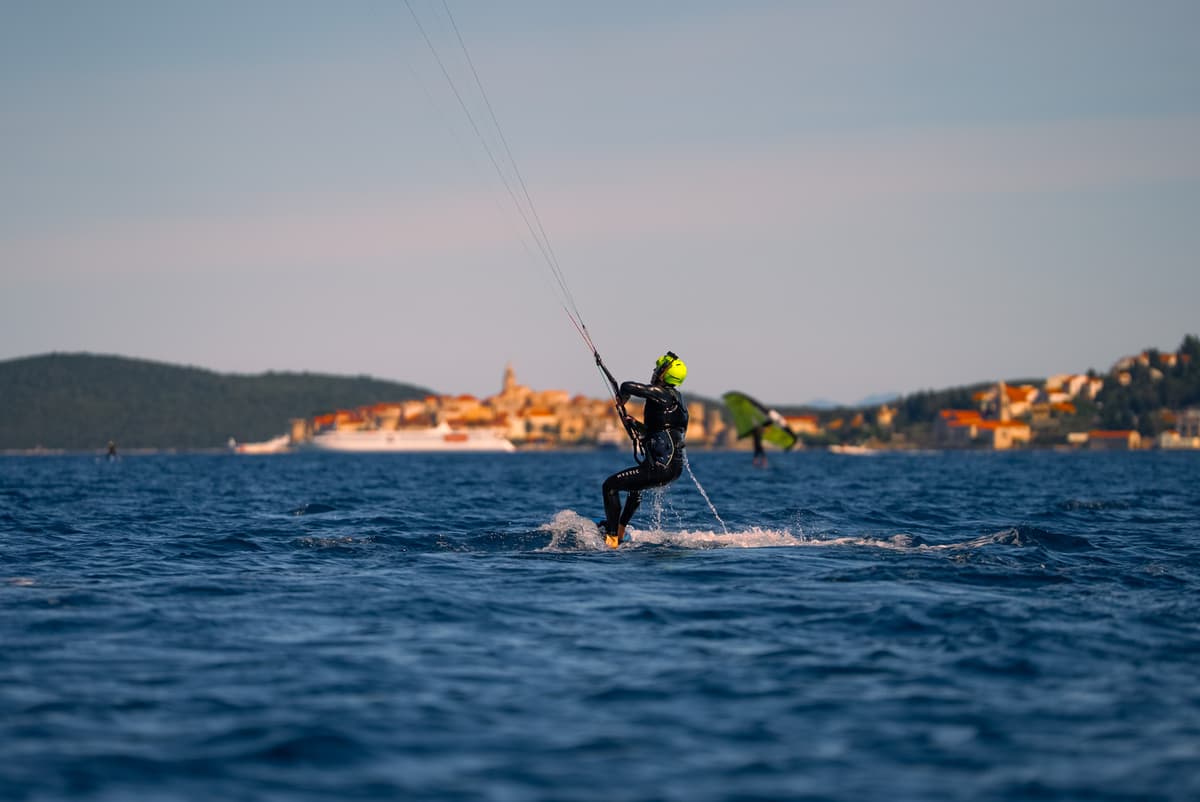
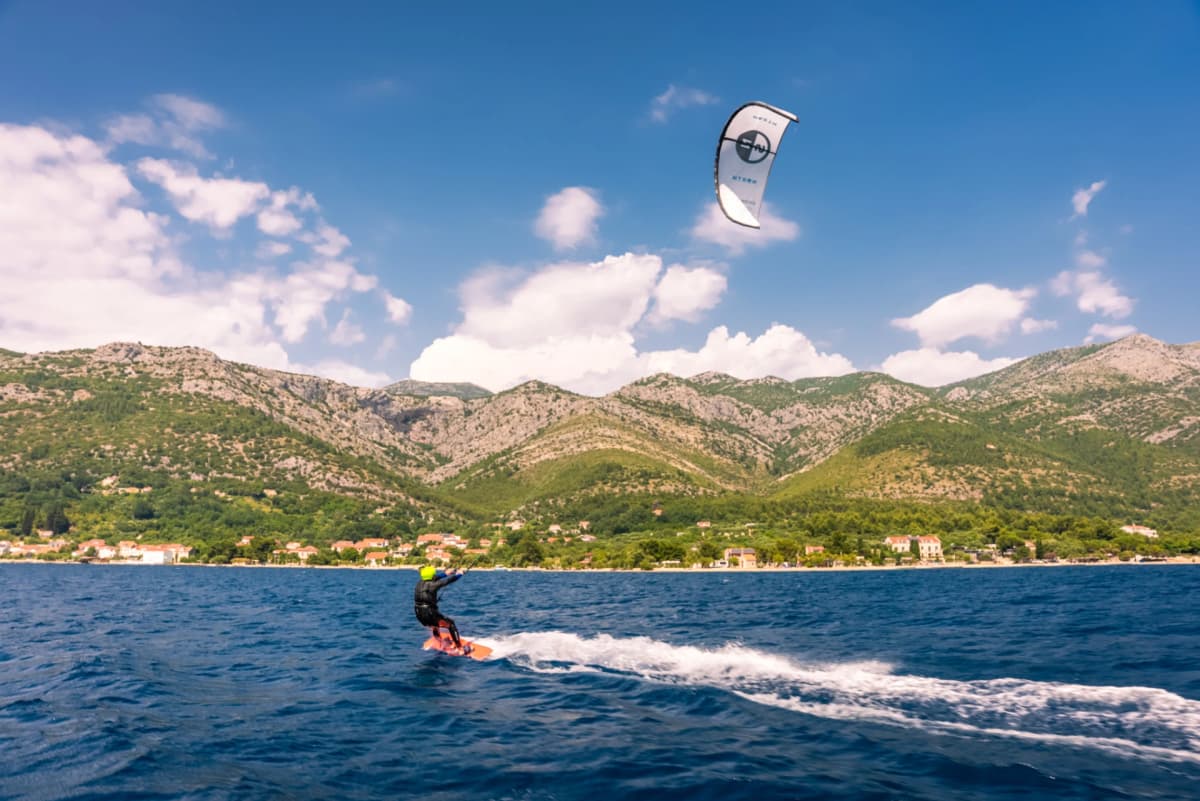
Kitesurfing, also called kiteboarding, uses a large, steerable kite to pull you across the water on a small board. The kite connects to a harness through long lines, and a control bar lets you steer it, manage its power and choose your direction.
Beginners start on land: how the wind works, how to rig the gear, and how to fly a small training kite. Lessons then move into the water with body dragging, board control, water starts and, eventually, riding on your own. From the beach it can look like a test of raw strength, but most of the pull goes through the harness rather than your arms. Balance, coordination, kite control and reading the wind matter far more than muscle. Once it clicks, kitesurfing runs from relaxed cruising on flat water to fast freeriding, waves and big jumps.
What is wing foiling?
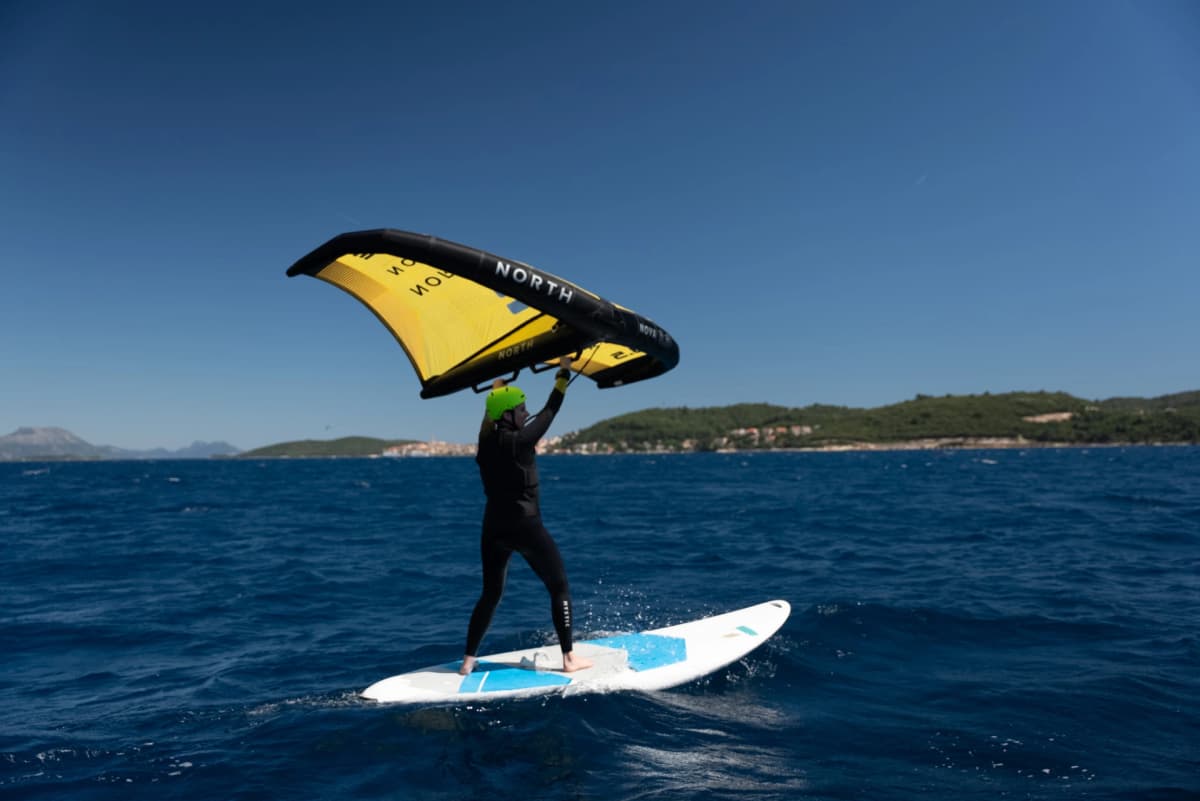
Wing foiling pairs a handheld inflatable wing with a board that has a hydrofoil mounted underneath. Unlike a kite, the wing is held in your hands with no lines attached. As you build speed, the foil generates lift and raises the board clear of the surface. That is the moment riders call flying: the drag and noise fall away and the ride turns smooth, quiet and surprisingly fast, even over choppy water.
Learning usually starts with handling the wing on the beach, then practising on a large, stable board before you stand, steer and generate enough speed to lift onto the foil. Beginner gear is deliberately bigger and more forgiving than the compact boards experienced riders use.
Kitesurfing or wing foiling: which should you choose?
Both use the wind, but they feel very different. Choose kitesurfing if you are drawn to speed, powerful acceleration, jumps and the sensation of being pulled across the water. The safety and kite-control learning curve is steeper at first, but progress becomes hugely rewarding once you nail the water start.
Choose wing foiling if you like the idea of gliding silently above the surface with compact gear and no long lines. The wing itself is fairly intuitive; the patience goes into balancing the board and learning to rise onto the foil.
Your background helps too. Windsurfers pick up wing handling quickly, surfers and paddleboarders are already used to balancing on a board, and kitesurfers know how to read the wind even if holding a wing feels new. There is no wrong choice, and plenty of riders end up doing both.
Why Croatia is such a good wind-sports destination
Croatia pairs reliable summer weather with clear water, dramatic coastline and historic towns that are worth a visit even on your days off the water. That balance matters: a great wind-sports trip needs more than a breezy beach. You also want good places to stay and eat, things for non-riding partners to do, and a plan B for days when the wind does not cooperate. Along the coast, the season runs through the warmer months, when thermal winds turn regular and the sea is warm enough for long sessions. Among Croatia's established spots, Viganj stands out because the geography of the Pelješac Channel funnels and strengthens that summer wind.
Why Viganj is one of Croatia's best-known kitesurfing spots
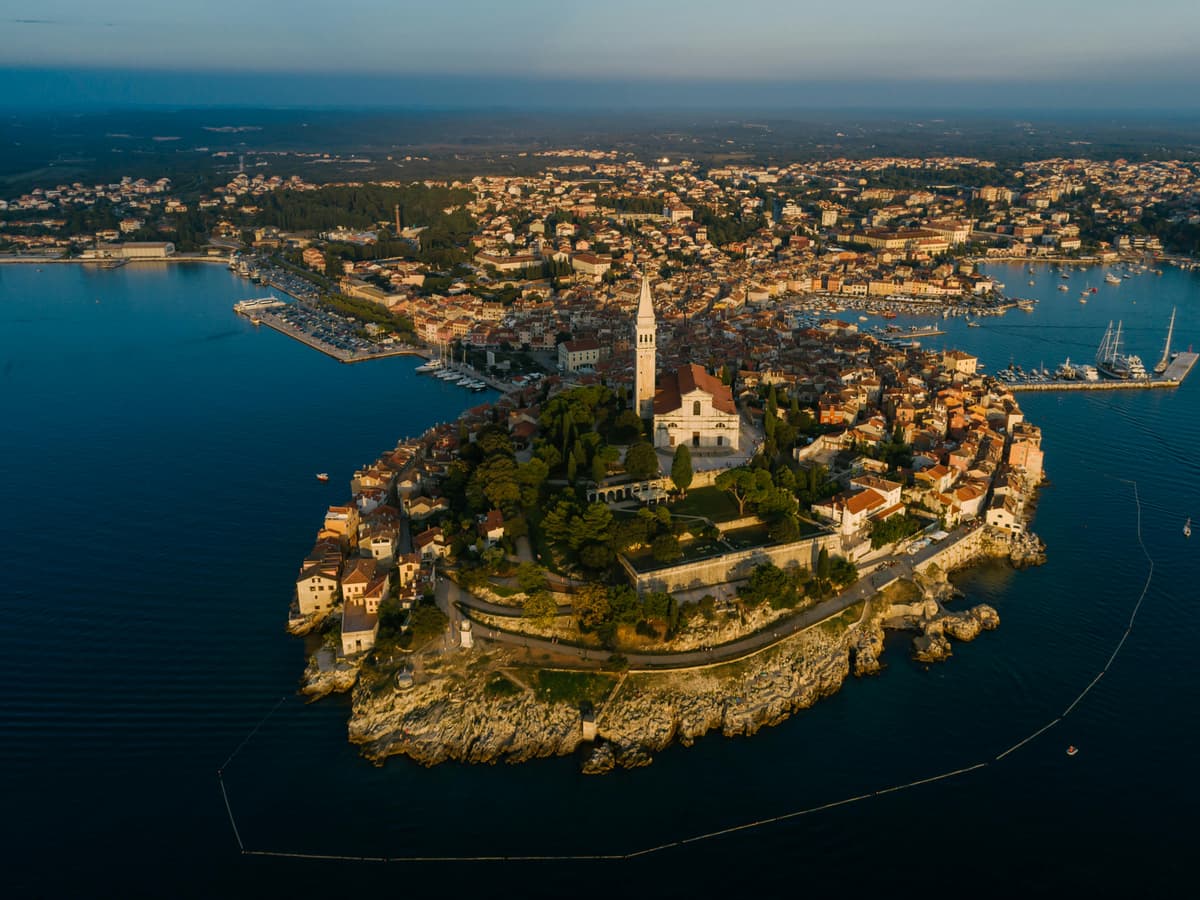
Viganj sits about eight kilometres west of Orebić, close to one of the narrowest points of the channel between Pelješac and Korčula. As the land heats through summer, the thermal maestral builds and accelerates through that gap, usually filling in during the late morning and holding through the afternoon and into the evening. That dependable daily rhythm is why windsurfers and kitesurfers have come here for decades, and why the beach around Ponta Liberan has become the heart of the local scene, host to major windsurfing events over the years.
The setting seals it: you ride looking across the blue channel to Korčula, with the Pelješac mountains behind the village. Schools, rentals, campsites, apartments and cafés all sit close together, and in much of Viganj you can carry your gear from your accommodation straight to the water. No long drive to the spot.
What are the wind conditions like in Viganj?
A typical summer day starts calm. Mornings are lighter with flatter water; as the land warms, the thermal wind builds, usually strengthening from late morning, and the main session arrives once the maestral is established across the channel. Exact strength and timing shift with the wider weather, cloud cover and temperature: some days suit big wings, foils and beginner gear, while stronger days favour experienced kitesurfers on smaller kites. Local knowledge counts for a lot here. A school or instructor will match the gear to the day and to your ability, so do not pick equipment just because other riders are using it. Weight, experience, kite or wing design, board size and shifting wind all change the right setup.
Want to book one of these?
See the tripsIs Viganj suitable for beginners?
Yes, as long as you learn through a professional school. Several established centres run seasonally in Viganj, roughly May to October, offering beginner courses, private tuition, advanced coaching and rentals. Do not try to teach yourself kitesurfing: rigging, wind direction, launching, landing, safety systems and right-of-way all need to be understood before you ride unsupervised. Wing foiling looks simpler with no long lines, but the foil under the board demands care, and a helmet, suitable protection and proper instruction are strongly recommended. A beginner lesson adapts to the day: on a light morning you might start with theory and basic control, then move into the water as the wind builds. Progress is personal, so treat your first course as the start of the sport rather than a promise you will be independent by sunset.
What to expect from a kitesurfing lesson
Your first kitesurfing lesson usually begins on land. The instructor covers wind direction, the wind window, rigging and the kite's safety systems, and you practise steering a training kite to feel how small bar movements change its power and direction. Once your control is solid, the lesson moves into the water: relaunching the kite, using the safety release and body dragging without a board. The board comes later, when you learn to position it, keep the kite steady, build controlled power and land your first water start. Expect to spend plenty of time in the water. That is not the lesson going badly; that is simply how almost everyone learns.
What to expect from a wing foil lesson
A wing foil lesson also opens with the gear and the wind. First you learn to carry, position and control the inflatable wing: how to make power, ease it off and move the wing safely from side to side. The first water session often uses a large, high-volume board for extra stability while you practise kneeling, standing, steering and returning to the start. Then the foil takes centre stage: how weight and board speed control the lift, how to stop the board rising too sharply, and how to set it back down smoothly. Your first controlled flight might last only a few seconds. It will probably still be the part of the trip you remember best.
When is the best time for kitesurfing in Viganj?
The broad season runs May to October, with June through September the most popular stretch. June brings warm weather, long days and fewer visitors than peak summer. July and August are the liveliest, with the busiest scene, so book accommodation and lessons early. September suits travellers who prefer things quieter: the sea is still warm and the village more relaxed. May and October can deliver good sessions too, especially for experienced riders who are flexible with dates and happy in cooler conditions, though the thermal wind is less dependable than in midsummer.
What equipment do you need?
For your first lessons, nothing. Schools provide the activity-specific gear: the kite or wing, board, harness where relevant, safety systems and protection. Bring swimwear, a towel, sunscreen and water, and depending on the month the school may suggest a wetsuit. Water shoes can help around rocky or pebbled entries, though your instructor will advise on the best footwear for the exact launch area. Do not buy a full setup before you take lessons. The right gear depends on your weight, experience, local conditions and riding style, and the best beginner board or foil is often nothing like what you will want once your skills improve.
Can experienced riders rent equipment in Viganj?
Generally yes, though centres may ask about your experience before releasing gear. That is normal: the operator needs to know you can ride independently, follow local rules and safely launch, land and return the equipment. Availability also depends on the wind and on which sizes are already out with students, so reserving ahead is wise in July and August, especially for a specific kite, wing, board or foil size. Even if you are experienced, ask for a local spot briefing when you arrive. Entry areas, swimming zones, boat traffic, wind shadows and local rules can differ from your home break.
What else can you do around Viganj?
Viganj is more than a launch site. The coastal road is made for easy walks and bike rides, and the village has small cafés and beach bars where the day drifts on after the wind drops. Orebić, a short drive away, adds restaurants, shops and ferry connections, and Korčula sits just across the channel for an easy day out. The peninsula is also one of Croatia's great wine regions, so a rest day can mean local wineries and small villages around Dingač and Potomje. More active visitors can hike the hills above the coast, ideally starting early in summer because of the heat; the higher slopes around Sveti Ilija reward you with sweeping views over Pelješac and the islands, but the terrain needs proper footwear, plenty of water and careful planning.
How long should you stay?
A single lesson is enough to feel what the sport is about, but a longer stay gives you a real shot at progress. For beginners, four to seven days is a sensible minimum: it lets the school spread several sessions around the wind rather than cramming everything into one fixed afternoon. Experienced riders can make a weekend work, but a week gives far more flexibility when the weather turns. Viganj also slots neatly into a longer Croatian trip: a few days on Pelješac, a hop to Korčula, then on towards Dubrovnik, Split or another island. If you want to plan the rest of the journey, it is easy to explore more experiences along the Croatian coast.
Tips for planning your first wind-sports trip
Book your lessons early in your stay, so the school can push a session later if the first day is unsuitable. Tell the operator your correct weight, board-sports background and swimming ability, which helps them prepare the right gear. Do not schedule a demanding lesson straight after a long drive or a late arrival: both sports need concentration, and you will learn faster rested. Protect yourself from the sun, since the wind can make strong summer heat feel deceptively mild. And above all, listen to your instructor. Sometimes the safest call is to cut a session short or postpone it. The wind will come back.
Frequently asked questions
Is Viganj good for kitesurfing?
Yes. Its position beside the narrow Pelješac Channel creates regular summer thermal winds, and the village has established schools, rentals and a long wind-sports tradition.
Can complete beginners learn kitesurfing in Viganj?
Yes. Local schools run beginner courses that start with wind theory, gear, kite control and safety before moving into the water.
Can I learn wing foiling without previous surfing experience?
Yes. Windsurfing, surfing or paddleboarding all help, but none is required. Beginners use larger, more stable gear while learning.
Which is easier, kitesurfing or wing foiling?
They are hard in different ways. Kitesurfing demands careful control of a powerful kite and its safety systems; wing foiling has simpler wing handling, but balancing the board and controlling the foil takes time.
What is the best month for kitesurfing in Viganj?
June to September are the main months. July and August are liveliest, while June and September are usually quieter.
Do I need my own equipment?
No. Beginner lessons include all the activity-specific gear, and experienced riders can ask about rentals.
Should I reserve lessons in advance?
Yes, especially in July and August. Booking early also gives the school more room to arrange your sessions around good wind.
Book kitesurfing and wing foiling in Viganj
Whether you are drawn to the pull and speed of a kite or the silent flight of a foil, Viganj is one of the best places to feel Croatia from the water. The wind is part of daily life here: you see it filling the channel with colour and hear people planning tomorrow's session before today's has even ended. When you are ready, book a kitesurfing lesson or a wing foil lesson in Viganj with an experienced local instructor, pick the course that fits your level, and find out why so many riders come back to Pelješac every summer.
Ready to explore Croatia?
Book directly with local guides. Best prices, instant confirmation.
Browse all tripsBook what you just read about
Explore by activity